
How to Store Lyophilized Peptides in the Lab
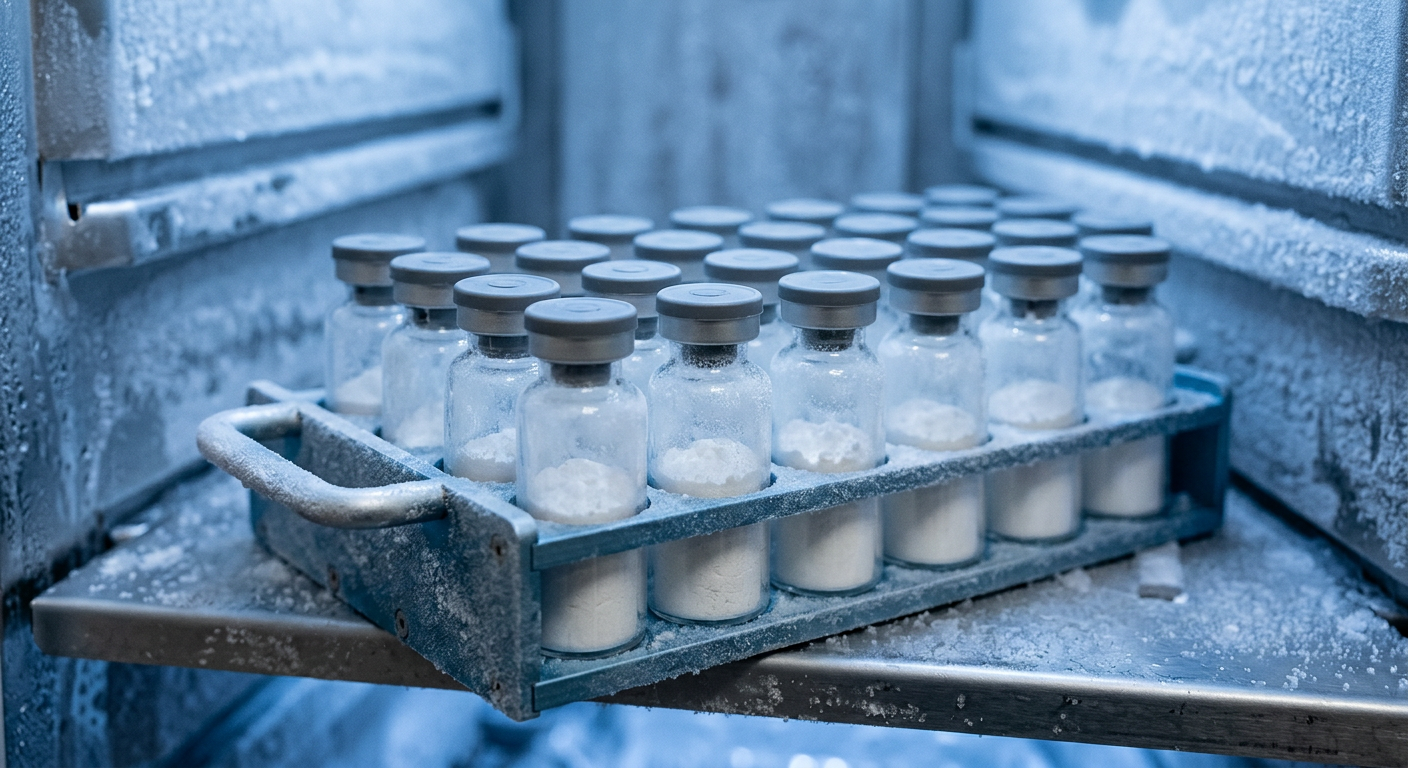
Most research peptides ship as a lyophilized (freeze dried) powder. Lyophilization removes water, which slows down the chemical reactions that break peptides apart. Handled correctly, a lyophilized peptide can remain stable for a long time. Handled poorly, it can degrade before your experiment even starts.
The four enemies of peptide stability
- Heat. Higher temperatures speed up degradation.
- Moisture. Water allows hydrolysis and promotes aggregation.
- Light. Some residues, such as tryptophan, are sensitive to light.
- Oxygen. Residues like methionine and cysteine can oxidize.
Storing lyophilized powder
- Short term: a standard laboratory refrigerator around 2 to 8 degrees Celsius is suitable for many peptides.
- Long term: a freezer at minus 20 degrees Celsius or colder is the common standard.
- Keep vials sealed until you are ready to work with them.
- Store away from light, in the original box or an opaque container.
Avoid condensation
The most common storage mistake is opening a cold vial right away. Moisture from the room condenses on the cold powder. Let the sealed vial reach room temperature first, usually 15 to 30 minutes, then open it.
Minimize freeze thaw cycles
Every freeze thaw cycle stresses the material. If you plan to use a peptide across several experiments, consider dividing it into aliquots so you only thaw what you need.
Reconstituted solutions
Once a peptide is dissolved, it is far less stable than the dry powder.
- Store solutions cold and protected from light.
- Use a suitable sterile diluent. Many labs use bacteriostatic water, which contains benzyl alcohol as a preservative. See our guide on bacteriostatic water vs sterile water.
- Label every vial with compound, concentration, date, and initials.
- Record the batch number so results can be traced back to the COA.
Quick checklist
- Sealed, cold, dark, dry
- Warm to room temperature before opening
- Aliquot to limit freeze thaw cycles
- Label and log every reconstituted vial
Every peptide from The Peptide Mart ships lyophilized in sealed glass vials with its batch COA. Browse the catalog.
All products sold by The Peptide Mart are intended strictly for laboratory research use only. They are not for human or veterinary use, and nothing in this article is intended as medical advice.