

Bacteriostatic Water vs. Sterile Water: Differences for the Lab
Two clear liquids, different roles
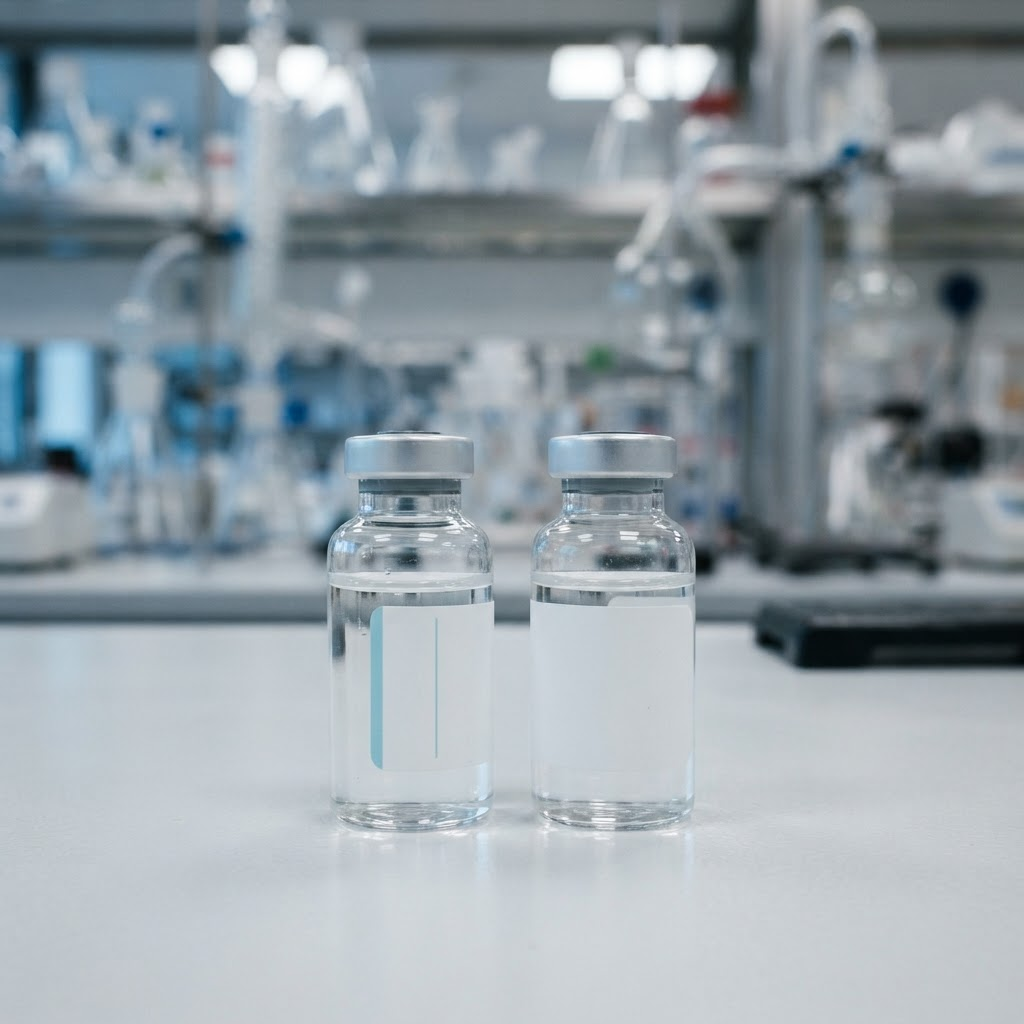
At a glance, bacteriostatic water and sterile water look identical — both are clear, purified liquids used in the laboratory to dissolve or dilute compounds. The practical difference comes down to one ingredient: bacteriostatic water contains a small amount of benzyl alcohol (around 0.9%), while sterile water contains nothing but purified, sterilized water.
That single difference changes how each behaves once a vial is opened, and it guides which one a researcher selects for a given protocol. This overview compares the two for laboratory use only.
Sterile water
Sterile water is purified water that has been sterilized and sealed. It contains no preservative. Once the seal is broken, there is nothing in the liquid to hold back microbial growth, so preservative-free water is handled as a single-use medium: whatever is not used is typically discarded rather than saved.
Its advantage is simplicity. With no benzyl alcohol present, sterile water adds the fewest possible variables to a sensitive experiment, which matters when even trace additives could confound results.
Bacteriostatic water
Bacteriostatic water adds benzyl alcohol as a bacteriostatic component. Because that ingredient inhibits the growth of many common bacteria, a sealed vial can be accessed multiple times during ongoing laboratory work while limiting microbial buildup between sessions.
This makes bacteriostatic water the more convenient choice when a single powdered sample will be brought into solution and sampled repeatedly over days or weeks.
Choosing between them
| Consideration | Sterile water | Bacteriostatic water |
|---|---|---|
| Preservative | None | Benzyl alcohol (~0.9%) |
| Typical reuse | Single use | Multi-use |
| Assay interference | Lowest | Possible from benzyl alcohol |
| Convenience for repeat sampling | Lower | Higher |
Neither is universally "better" — the right pick depends on whether repeat access or minimal additives matters more for a given research workflow.
For research use only
Both reagents are intended strictly for laboratory research. This comparison is educational and does not describe use in humans or animals.