

Reconstituting Lyophilized Peptides with Bacteriostatic Water
Why lyophilized peptides need a diluent
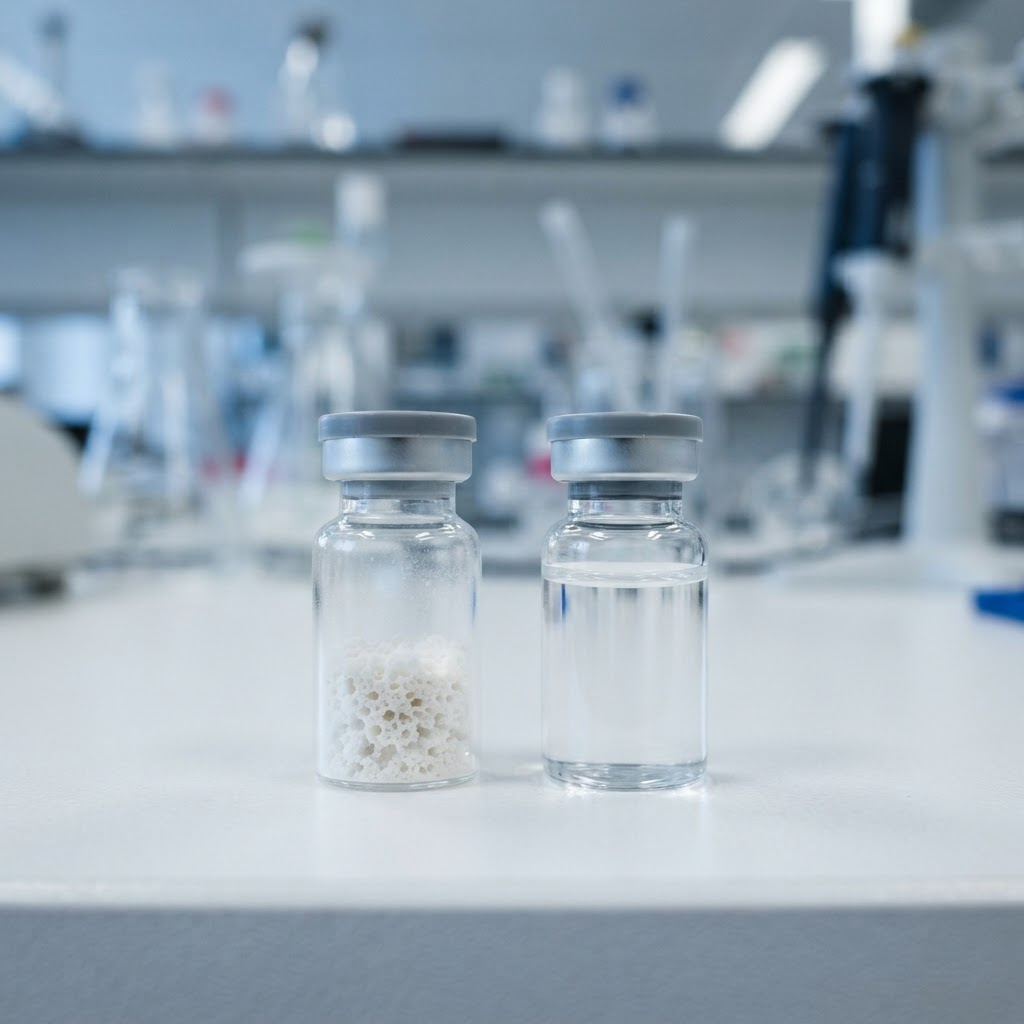
Many research peptides ship as a lyophilized (freeze-dried) powder because they are more stable in dry form during shipping and storage. Before they can be studied in vitro, that powder must be brought back into solution with a suitable liquid. Bacteriostatic water is one of the most common diluents chosen for this step in the laboratory.
This article outlines the general role bacteriostatic water plays when researchers reconstitute lyophilized peptides. It is provided for research and educational purposes only and contains no usage directions.
The role of bacteriostatic water
When a diluent is added to a vial of freeze-dried peptide, the powder dissolves into a liquid the researcher can then work with in assays. Two properties make bacteriostatic water popular for this:
- Benzyl alcohol as a bacteriostatic component. Because it inhibits bacterial growth, a reconstituted vial can be sampled more than once during ongoing laboratory work.
- Chemical simplicity. With no buffering salts, it adds few extra variables to an experiment.
Where an assay is sensitive to benzyl alcohol, or where a strictly preservative-free, single-use medium is required, researchers may select plain sterile water instead.
Good laboratory practice
Reconstitution in a research setting generally emphasizes gentle handling and clean technique:
- Let cold vials reach a stable working temperature before opening.
- Add the diluent slowly against the inner wall of the vial rather than forcefully onto the powder.
- Swirl gently to solubilize; avoid vigorous shaking, which can stress fragile peptide chains.
- Label the vial with the date of first access and store as directed on the product labeling.
These are general handling considerations for laboratory materials only.
Stability considerations
Once in solution, peptides are generally less stable than in their dry, lyophilized state. Researchers typically keep reconstituted material cold, protect it from light, and note how long a given compound remains suitable for study based on published stability data for that molecule.
For research use only
Peptides and reagents referenced here are intended solely for laboratory research. Nothing in this article describes or supports use in humans or animals.