

PT-141 (Bremelanotide): Melanocortin Receptor Research
Overview
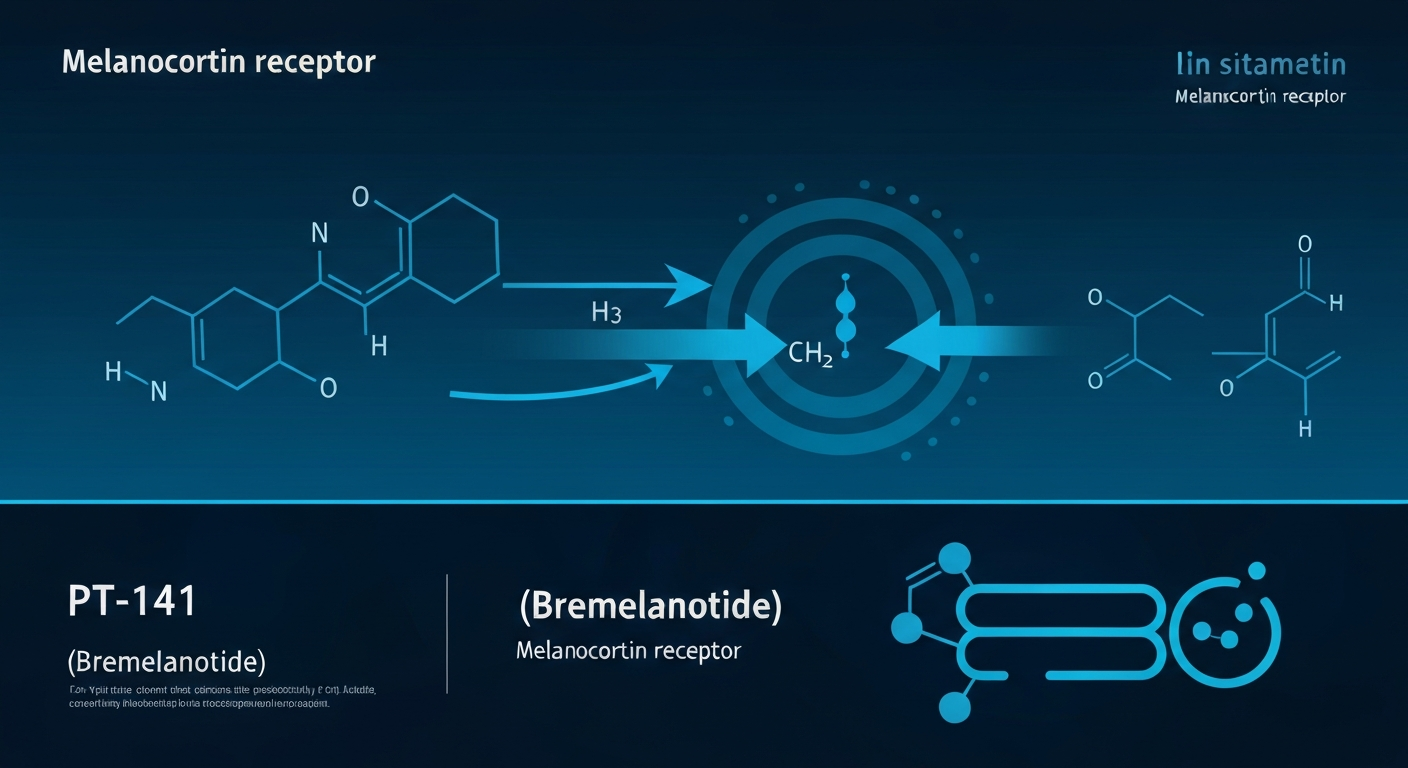
PT-141 (Bremelanotide) is a synthetic cyclic peptide derived from the melanocortin family that has been widely used in basic and preclinical research. As a melanocortin receptor agonist, PT-141 is of interest to researchers investigating central nervous system GPCR signaling, receptor subtype selectivity, and behavioral neurobiology. This article summarizes the pharmacological profile studied in the literature, common experimental approaches, and practical considerations for working with PT-141 as a research peptide.
Relationship to Melanocortin System
The melanocortin receptor system comprises five G protein–coupled receptors (MC1R–MC5R) with distinct tissue distributions and signaling properties. PT-141 (Bremelanotide) is a synthetic analog in this family that mimics aspects of the endogenous melanocortin peptides. Researchers have used PT-141 to probe melanocortin-mediated pathways in neuronal tissue and in vitro receptor systems to better understand receptor activation, downstream signaling (e.g., cAMP pathways), and receptor pharmacology.
Molecular Pharmacology
PT-141 acts as an agonist at melanocortin receptors, with activity reported at several receptor subtypes in the literature. Studies typically examine:
- Receptor binding affinity and selectivity across MC1R–MC5R
- Functional activation measured by second-messenger assays (such as cAMP accumulation)
- Receptor desensitization, internalization, and signaling bias
Researchers exploring PT-141 often focus on how structural features of cyclic peptides influence receptor selectivity and signaling outcomes. Understanding biased agonism at melanocortin receptors is an active area of inquiry, and PT-141 frequently serves as a comparator in such studies.
Common Experimental Approaches
PT-141 research spans in vitro, ex vivo, and in vivo experimental models. Typical methods used to characterize PT-141 and related peptides include:
- In vitro receptor binding assays (radioligand displacement, surface plasmon resonance)
- Functional assays measuring second-messenger responses (cAMP assays, reporter gene systems)
- Receptor expression studies in heterologous cell lines (e.g., transfected HEK293 or CHO cells)
- Electrophysiological recordings and calcium imaging in neuronal preparations
- Behavioral paradigms and neurochemical analyses in preclinical models to investigate central melanocortin signaling
These approaches allow researchers to dissect receptor subtype engagement, potency in cellular assays, and downstream pathway activation without implying any clinical application.
Research Applications
Researchers have used PT-141 (Bremelanotide) as a tool compound to investigate several aspects of melanocortin biology, including:
- Mechanistic studies of GPCR activation and G protein versus beta-arrestin signaling
- Mapping receptor distribution and functional roles in discrete brain regions
- Comparative pharmacology among melanocortin receptor subtypes
- Structure–activity relationship (SAR) studies for novel peptide analogs
By employing PT-141 alongside molecular biology and pharmacology techniques, investigators can probe fundamental questions about receptor function and neuronal network modulation in preclinical contexts.
Analytical Techniques & Quality Control
Given the importance of peptide purity and identity for reproducible research results, standard analytical practices include:
- Mass spectrometry (MS) for molecular weight confirmation and identification of degradation products
- High-performance liquid chromatography (HPLC) for purity assessment and quantification
- Amino acid analysis or peptide sequencing methods for structure verification
- Stability studies under relevant storage and experimental conditions
Documenting batch-specific characterization data (purity, certificate of analysis) is recommended to support reproducibility in research peptides studies.
Laboratory Handling and Practical Considerations
When working with PT-141 and related research peptides, investigators typically follow institutional and laboratory safety practices. Recommended general considerations include:
- Handle PT-141 as a research reagent; it is intended for laboratory use only and not for human or veterinary use outside of authorized research settings.
- Use appropriate personal protective equipment (PPE) and follow institutional biosafety guidelines when preparing and handling solutions.
- Verify peptide identity and purity prior to experimentation using HPLC/MS or equivalent methods.
- Prepare experimental reagents using validated buffers and maintain records of storage conditions and lot numbers to ensure reproducibility.
Avoid describing or providing any guidance on specific quantities, routes of delivery, or clinical use. Focus experimental protocols on assay conditions rather than in vivo procedural details unless justified by ethical approvals and institutional oversight.
Reporting and Experimental Design
For robust PT-141 research, consider these reporting practices:
- Report peptide source, lot number, purity, and analytic data.
- Describe receptor expression systems and assay readouts in sufficient detail for replication.
- Use appropriate controls (vehicle, known agonists/antagonists) and statistical methods suited to the experimental design.
Transparent reporting helps contextualize findings within the broader literature on melanocortin receptor pharmacology and research peptides.
Research-Use-Only Notice
PT-141 (Bremelanotide) and related peptides are supplied for laboratory research use only. They are not intended for human or veterinary clinical use, and this article does not provide guidance on amounts, routes of delivery, or clinical recommendations. Researchers should comply with institutional review, ethical approvals, and applicable regulations when designing experiments involving PT-141.
Conclusion
PT-141 (Bremelanotide) remains a valuable research peptide for the study of melanocortin receptor pharmacology, GPCR signaling, and neurobiological mechanisms in preclinical research. When used with appropriate analytical controls and laboratory practices, PT-141 can yield insights into receptor subtype function and the molecular determinants of peptide–receptor interactions. Researchers should maintain rigorous documentation and adhere to research-use-only restrictions in all experimental work.
Keywords: PT-141, Bremelanotide, PT-141 research, melanocortin receptor, research peptides
Related Research Compounds
Explore related research-grade peptides available for laboratory use only:
Browse the full research peptide catalog for more options.