
Peptides vs Proteins: The Key Differences Explained
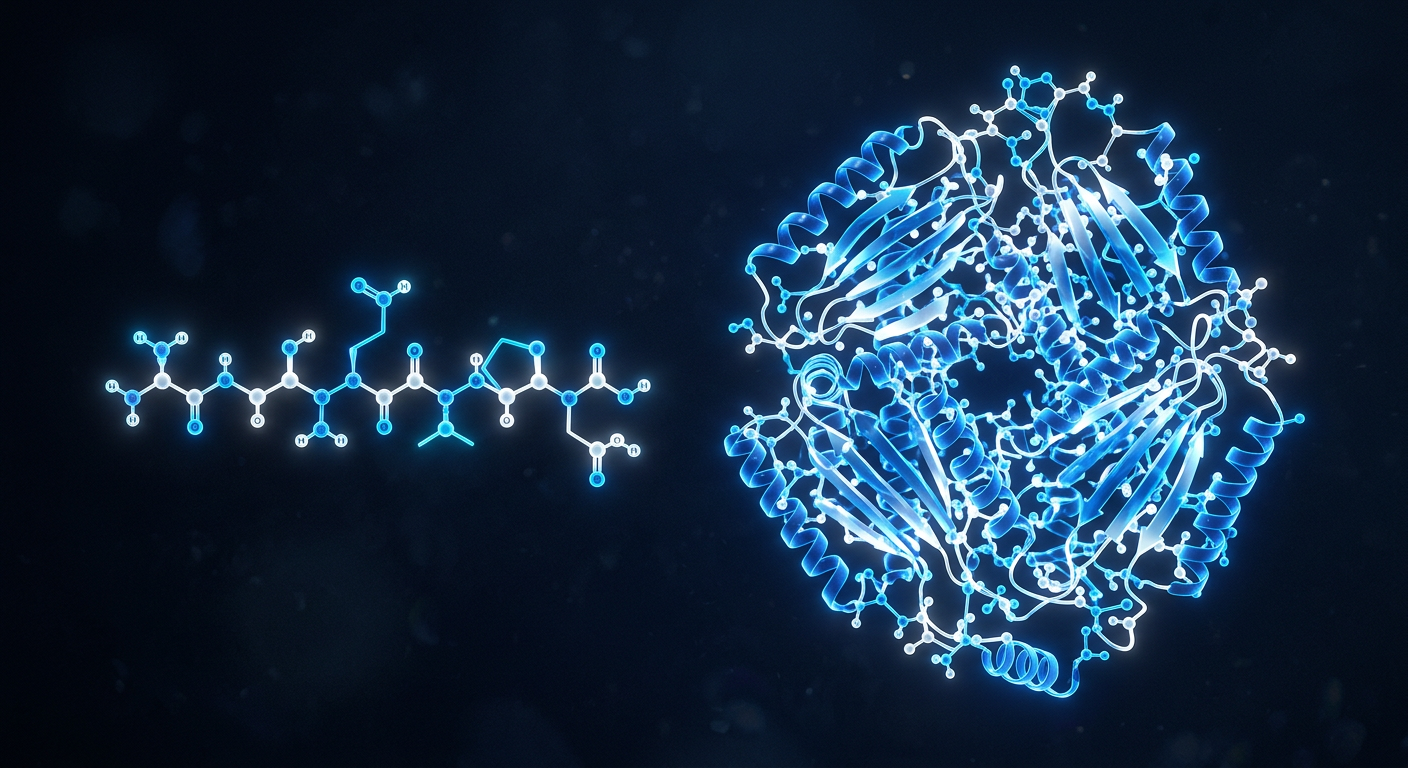
Peptides and proteins are built from the same building blocks, amino acids, linked by peptide bonds. So what separates them?
Size is the main difference
- Peptides are short chains, typically 2 to about 50 amino acids.
- Proteins are long chains, often hundreds or thousands of amino acids, usually folded into complex shapes.
The cutoff is not strict, but around 50 residues is the common dividing line.
Structure
Short peptides often have relatively simple structures. Some adopt a defined shape, such as a helix, while others are flexible in solution. Proteins fold into precise three dimensional structures with secondary, tertiary, and sometimes quaternary levels, and that folding determines how they function.
How they are made
Proteins are typically produced by living cells through transcription and translation, or by recombinant expression systems in the lab.
Research peptides are usually made by solid phase peptide synthesis (SPPS). Amino acids are added one at a time to a growing chain anchored on a resin. After the sequence is complete, the peptide is cleaved, purified by HPLC, and lyophilized into a stable powder.
Why researchers use synthetic peptides
Synthetic peptides are useful research tools because they are:
- Precise. The exact sequence is known and can be confirmed by mass spectrometry.
- Modifiable. Researchers can swap residues, add labels, or change termini to study structure activity relationships.
- Targeted. Short sequences can mimic a binding region of a larger protein, which makes them useful in receptor and signaling studies.
- Reproducible. Batch testing allows consistent material across experiments.
Common terms
| Term | Meaning |
|---|---|
| Dipeptide | Two amino acids |
| Oligopeptide | A short chain, roughly up to 20 residues |
| Polypeptide | A longer chain |
| Protein | One or more folded polypeptides |
Explore our Research Library for compound specific research overviews, or browse the catalog.
All products sold by The Peptide Mart are intended strictly for laboratory research use only. They are not for human or veterinary use, and nothing in this article is intended as medical advice.