
How to Read a Peptide Certificate of Analysis (COA)
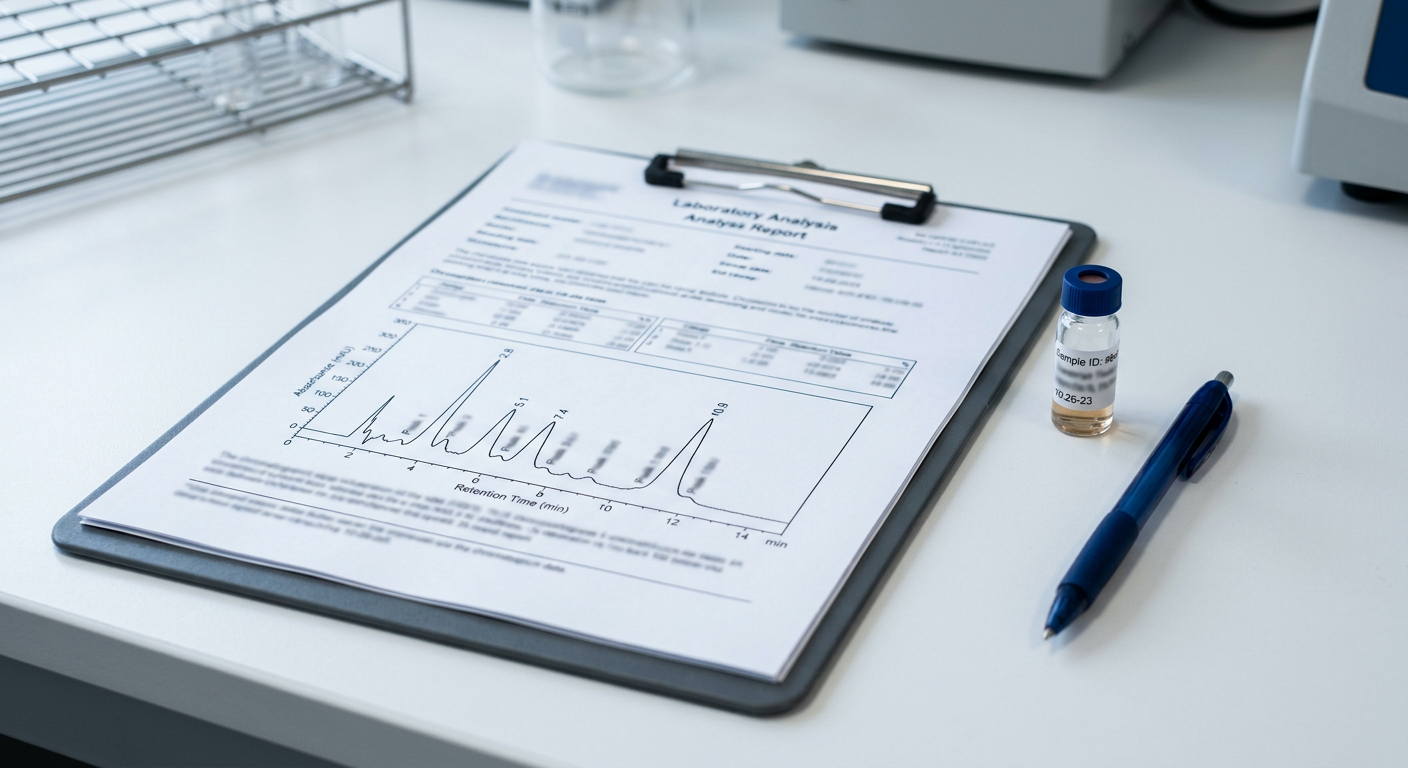
A Certificate of Analysis (COA) is the document that proves a research peptide is what the label says it is. If you only check one thing before starting an experiment, check the COA.
The sections of a COA
1. Product and batch information
At the top you will find the compound name, the batch or lot number, and the test date. Always match the batch number on the COA to the batch number on your vial. A COA for a different batch tells you nothing about the material in your hands.
2. Purity
Purity is usually reported as a percentage measured by high performance liquid chromatography (HPLC). For research peptides, a purity of 98 percent or higher is a common benchmark, and many quality batches exceed 99 percent. Purity tells you how much of the material is the target peptide versus related impurities such as truncated or deleted sequences.
3. Identity
Purity alone is not enough. A sample can be very pure and still be the wrong molecule. Identity is typically confirmed by mass spectrometry (MS), which measures the molecular weight of the compound. The observed mass should match the theoretical mass of the sequence within a small tolerance.
4. Quantity or content
Some COAs report the actual measured amount of peptide in the vial. This lets you confirm that a vial labeled with a given amount truly contains it.
5. Additional tests
Depending on the lab, you may also see endotoxin results, moisture content, or appearance (for example, "white lyophilized powder").
Reading the HPLC chromatogram
Many COAs include the chromatogram itself. You are looking for:
- One dominant peak. This is the target peptide.
- Small or no secondary peaks. These represent impurities.
- A peak area table that matches the purity reported at the top.
Red flags
Be cautious if a COA:
- Has no batch number, or the batch does not match your vial.
- Reports purity with no method listed.
- Shows no identity test at all.
- Looks identical across every product and every batch.
- Comes from a lab that cannot be named or verified.
Where to find our COAs
Every batch sold by The Peptide Mart ships with its Certificate of Analysis, and you can browse COAs by product on the Quality page or directly on each product page.
All products sold by The Peptide Mart are intended strictly for laboratory research use only. They are not for human or veterinary use, and nothing in this article is intended as medical advice.