

Bacteriostatic Water Storage and Shelf Life in the Lab
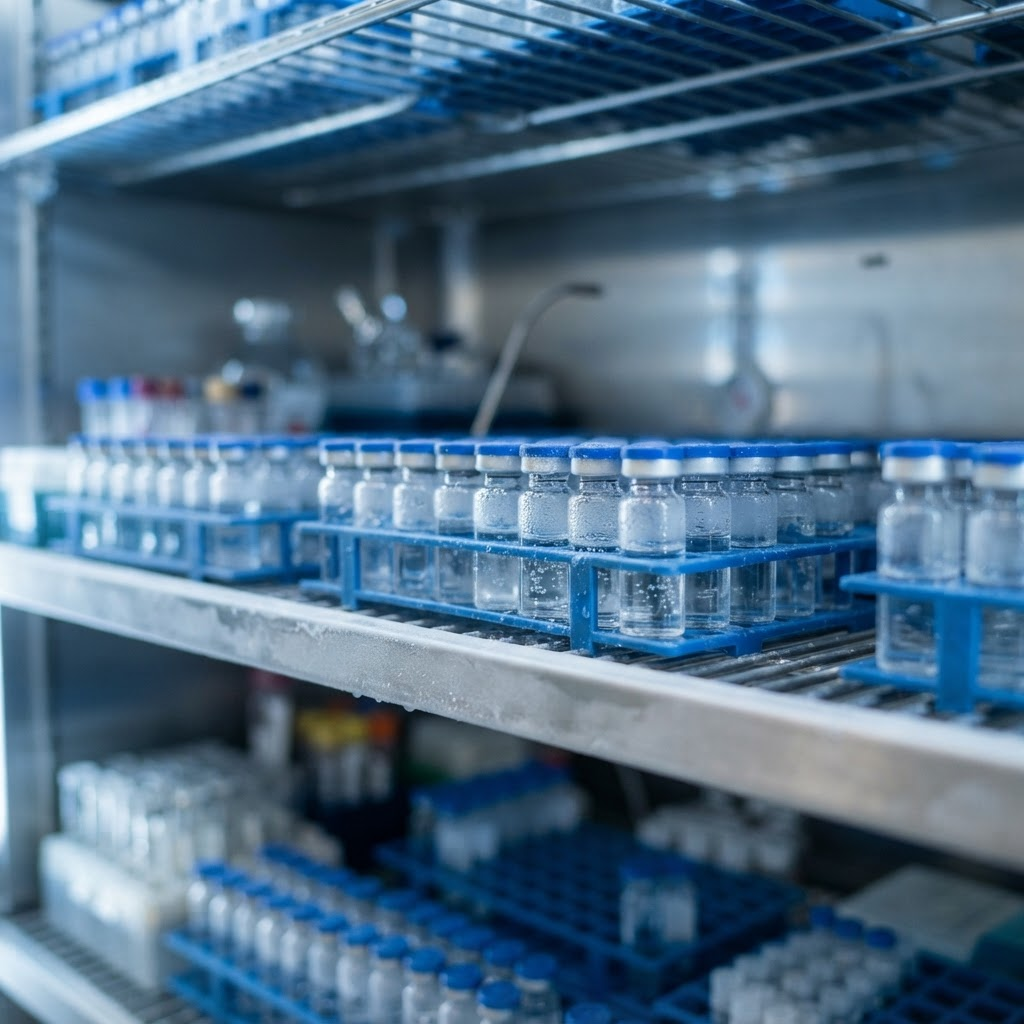
Keeping a lab reagent in good condition
Bacteriostatic water is a simple reagent, but like any laboratory material its usefulness depends on proper storage and handling. Because the benzyl alcohol it contains inhibits — rather than eliminates — microbial growth, good technique still matters once a vial has been opened. This overview summarizes general storage considerations for research settings.
Before opening
An unopened, sealed vial is generally stored at controlled room temperature, away from direct light and extremes of heat or cold, following the manufacturer's labeling. In this sealed state it typically remains stable until the printed expiration date.
After first access
Once the seal is first pierced, the clock effectively starts. Benzyl alcohol slows microbial growth but does not make a vial indefinitely workable. Common laboratory practice includes:
- Labeling the vial with the date of first access.
- Returning it to cold storage between sessions when appropriate for the workflow.
- Using clean technique each time the vial is sampled.
- Following any "use within" guidance on the product labeling for the period after first entry.
Signs a vial should be discarded
Researchers routinely inspect reagents before each use. A vial is typically retired if it shows any of the following:
- Cloudiness, haziness, or visible particles
- Discoloration
- A compromised or leaking seal
- An expired date, or a first-access window that has lapsed
When in doubt, the conservative laboratory choice is to discard and open a fresh vial.
Why storage discipline matters
In research, reagent integrity is part of reproducibility. Contaminated or degraded diluent can quietly introduce variables into an experiment, so consistent storage, labeling, and inspection help keep results reliable.
For research use only
Bacteriostatic water and all related reagents are intended strictly for laboratory research and are not for use in humans or animals.